
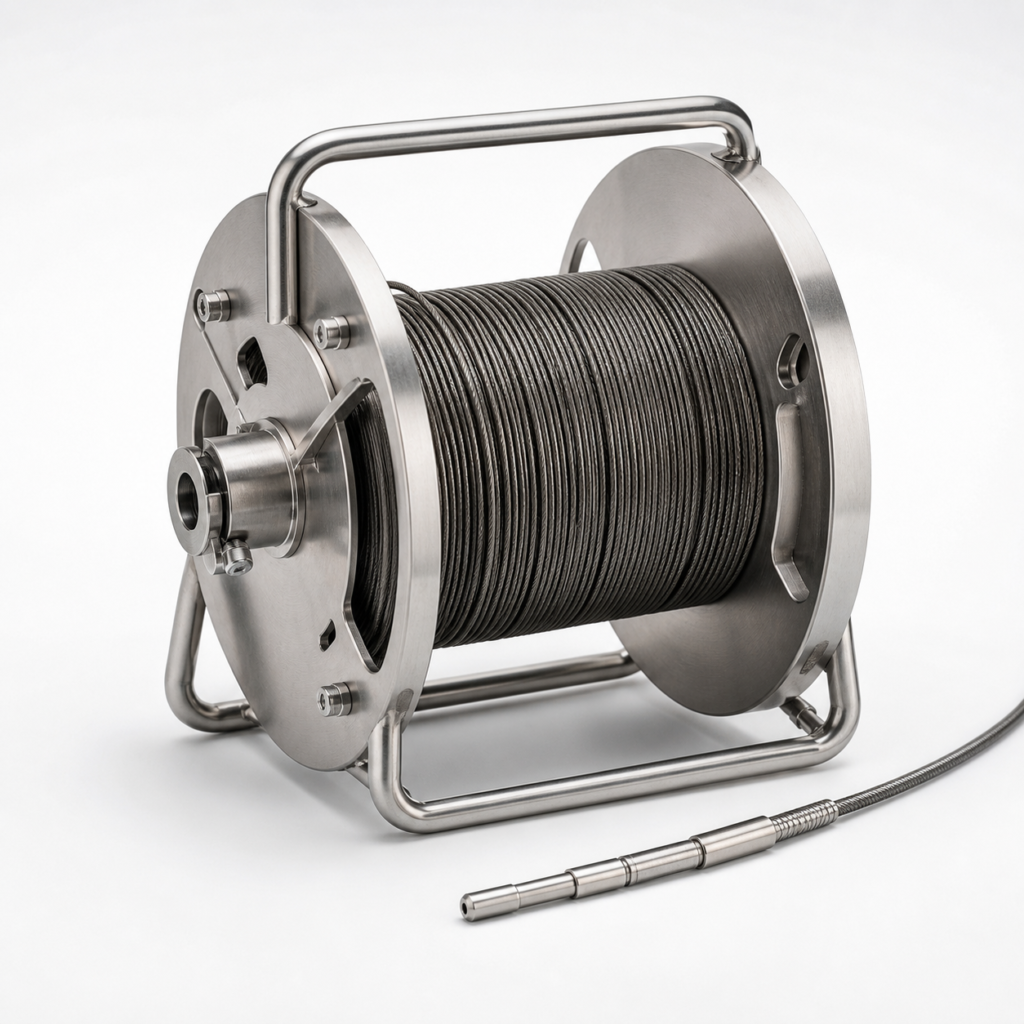
Short answer: A high-temperature fiber optic cable must be selected as a complete system: optical fiber and coating, metal or polymer protection, strength members, pressure and chemical resistance, termination, installation method and the duration of temperature exposure. A headline temperature such as 150°C or 300°C is not enough to approve a cable for a well, furnace, pipeline or industrial sensing project.
High-temperature optical cables are used where conventional telecom cable materials cannot maintain mechanical protection or stable optical performance. Typical projects include distributed temperature sensing (DTS), oil and gas wells, geothermal monitoring, pipelines, furnaces, power equipment and industrial process control. This guide explains how to compare temperature ratings and prepare an engineering RFQ.
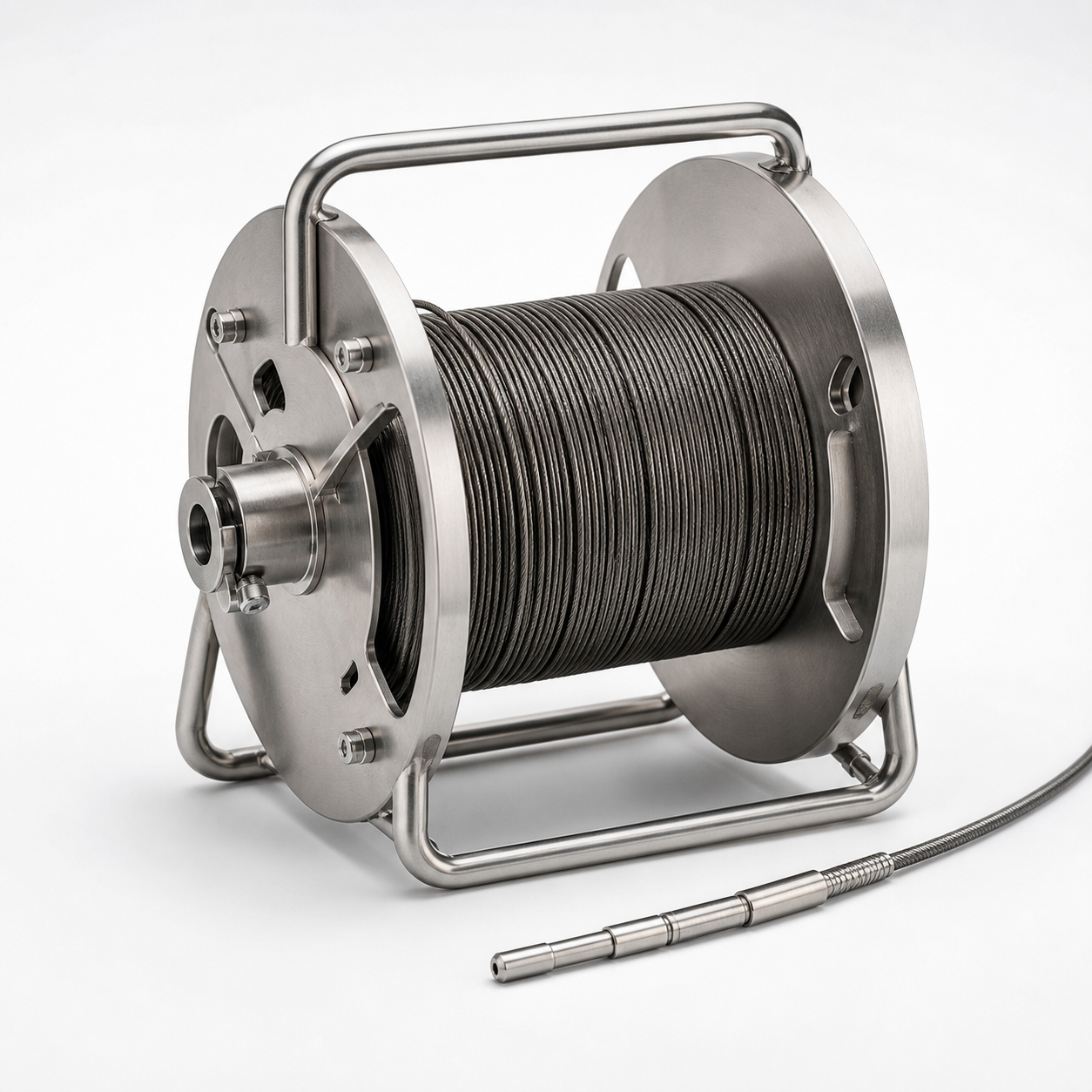
What does a high-temperature rating actually mean?
The rating should identify the operating temperature, exposure time and test conditions. Four values may be relevant:
- Continuous operating temperature: the range intended for sustained service.
- Short-term or survival temperature: a higher value allowed only for limited exposure.
- Installation temperature: the range in which the cable can be handled, bent and terminated safely.
- Temperature cycling performance: the optical and mechanical change after repeated hot-to-cold cycles.
Ask the supplier which definition supports the stated temperature and what change in attenuation, dimensions or mechanical condition is permitted after the test.
150°C vs 300°C fiber optic sensing cable
| Selection point | 150°C reference design | 300°C reference design |
|---|---|---|
| Typical use | High-temperature wells and industrial sensing where armored mechanical protection is required | More severe thermal environments requiring multilayer metal protection |
| Structural approach | Fiber unit protected by stainless-steel tube, inner sheath and galvanized steel-wire armor | Fiber unit protected by fiber paste, inner stainless-steel tube and outer stainless-steel tube |
| Main design question | Armor, tensile load, pressure and routing | Thermal stability, metal-tube construction, pressure and termination |
| RFQ evidence | Confirm the exact continuous/short-term rating, pressure, tensile load, minimum bend radius, cable diameter and optical acceptance criteria for the project | |
These are configuration references, not a universal rule that every 150°C or 300°C cable uses the same materials. The final construction should follow the environment, installation load and sensing method.
Reference 300°C cable structure
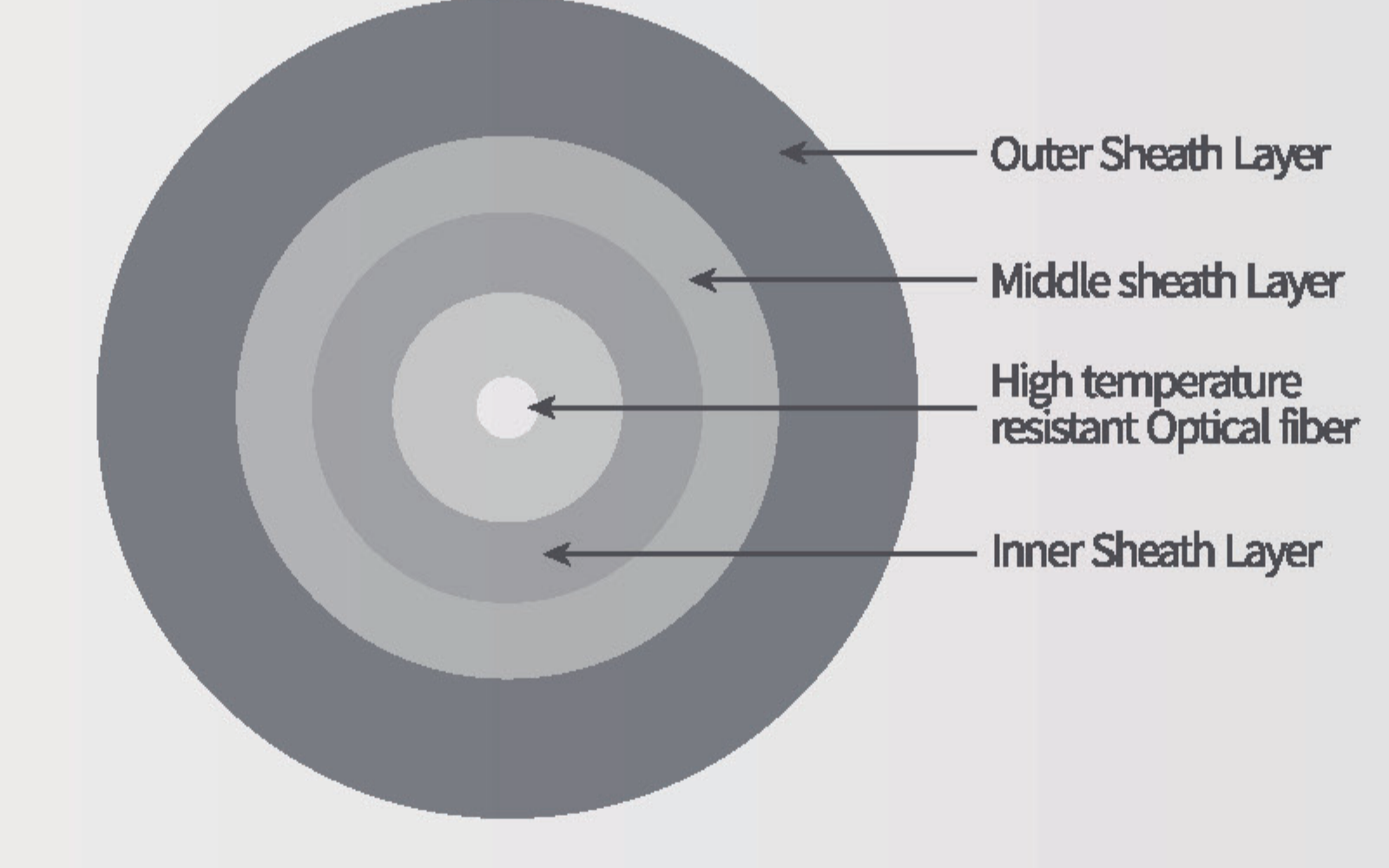
In a high-temperature metal-tube cable, the tube system helps isolate the fiber from pressure, crushing and chemical exposure. Fiber paste may support environmental isolation and manage movement inside the tube. The designer must still control differential expansion, microbending and termination stress because temperature changes can translate material movement into optical loss.
Reference 150°C armored cable structure
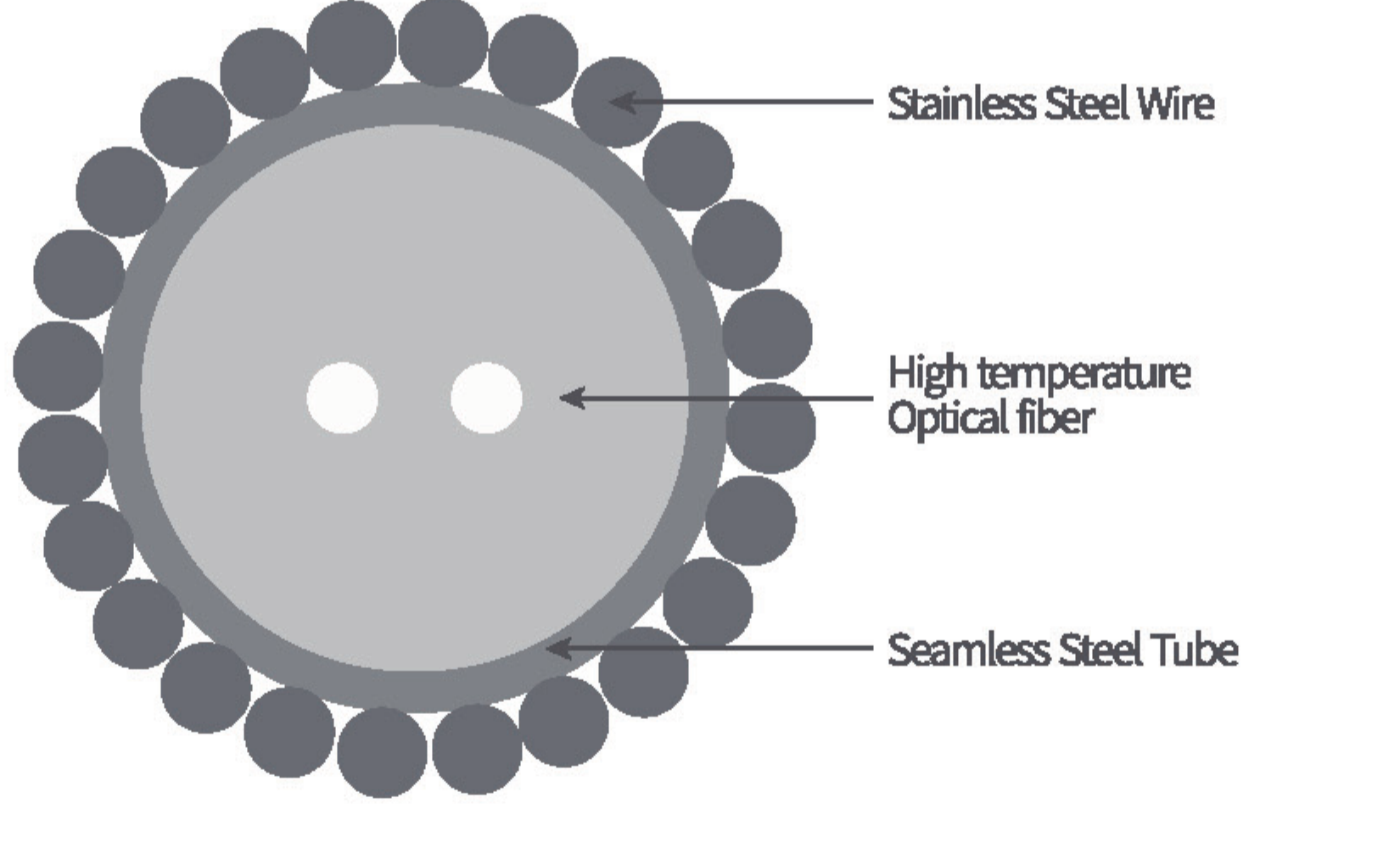
Steel-wire armor can improve tensile and crush resistance during deployment, but it also changes cable diameter, mass, stiffness and minimum bend radius. A stronger cable is not automatically easier to install. Reel handling, guide radius, pulling equipment and termination hardware should be reviewed as one system.
Seven design factors beyond temperature
- Fiber and coating: choose the optical fiber, protective coating and wavelength for the sensing or communication method.
- Pressure: downhole and subsea projects must define external pressure and any pressure cycling.
- Hydrogen and chemicals: oil, gas and geothermal environments may require resistance to hydrogen-related attenuation and chemical exposure.
- Tensile and crush load: include deployment depth, cable mass, pulling method and localized mechanical loads.
- Bend radius: specify installation and operating bend limits, especially around reels, sheaves and wellhead hardware.
- Termination: define the transition from harsh-environment cable to interrogator, splice enclosure or connectorized lead.
- Optical acceptance: identify test wavelengths, attenuation limits, continuity, splice/connector limits and the required report.
High-temperature cable for DTS, FBG and point sensing
Distributed temperature sensing measures temperature along the fiber length using a compatible interrogator and scattering-based analysis. The cable becomes a distributed sensor and must transfer the environmental temperature predictably while protecting the fiber.
Fiber Bragg grating (FBG) systems use discrete wavelength-sensitive elements and may require controlled strain transfer, sensor packaging and wavelength stability. Point sensors can use dedicated sensing elements or probes at selected positions. The correct cable construction depends on whether temperature, strain, pressure or multiple measurands must be separated.
For a deeper overview, read Distributed Temperature Sensing: How It Works & Fiber Optic Cable Selection.
Qualification and test plan
The test plan should reflect the installation and service environment. IEC 60794-1-22 defines environmental test procedures for optical fiber cables, including temperature-related methods. A project may also require tensile, crush, bend, pressure, chemical exposure, aging or cycling tests, with optical monitoring before, during or after the test.
ITU-T G.652 defines attributes for standard single-mode optical fiber and cable, but compliance with a fiber recommendation does not by itself qualify an entire high-temperature cable assembly. The protective structure and project-specific test plan remain essential.
RFQ checklist for high-temperature fiber optic cable
- Continuous, short-term and installation temperature ranges
- Exposure duration and expected thermal cycles
- Application: DTS, FBG, communication or other sensing method
- Fiber type, count, coating and operating wavelength
- External pressure, tensile load, crush load and bend radius
- Hydrogen, oil, gas, water, steam and chemical exposure
- Cable length, reel requirement and installation equipment
- Termination, splice transition and interrogator interface
- Optical test limits, environmental qualification and documentation
- Prototype and production quantity
Review the High-Temperature Oil Well Fiber Optic Sensing Cable for 150°C and 300°C reference constructions, browse additional special fiber optic cables, or send your temperature, pressure and installation requirements for engineering review.
Frequently asked questions
Is a 300°C cable always better than a 150°C cable?
No. A higher temperature design may be heavier, stiffer, larger or more expensive. Select the construction that meets the real thermal, mechanical, chemical and installation requirements with appropriate margin.
Can standard telecom fiber be used at high temperature?
The glass may transmit light, but the coating, buffer, jacket, strength system and termination can limit service temperature. Qualification must address the complete cable, not only the bare glass.
What is the difference between continuous and short-term temperature?
Continuous temperature is intended for sustained operation. Short-term or survival temperature is normally allowed for a limited duration under defined conditions and should not be treated as the continuous rating.
Why are stainless-steel tubes used in downhole sensing cables?
They can provide mechanical, pressure and environmental protection around the optical fiber unit. The exact tube alloy, wall construction and multilayer design must match the project.
What information is most important for a quotation?
Provide temperature and duration, pressure, environment, sensing method, fiber, cable length, mechanical loads, termination, optical limits and quantity.
Technical references
- IEC 60794-1-22 — Environmental test methods for optical fibre cables
- ITU-T G.652 — Characteristics of a single-mode optical fibre and cable