
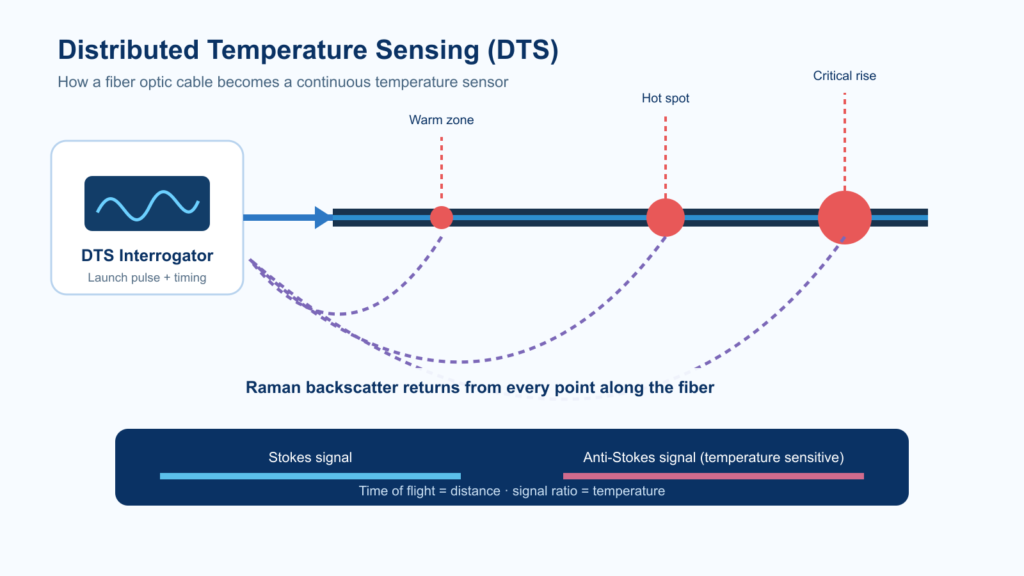
Distributed temperature sensing (DTS) uses an optical fiber as a continuous temperature sensor. A DTS interrogator sends laser pulses into the fiber, analyzes temperature-sensitive backscatter and maps temperature against distance. The sensing cable must be selected for both measurement performance and the mechanical, thermal, pressure and chemical conditions of the installation.
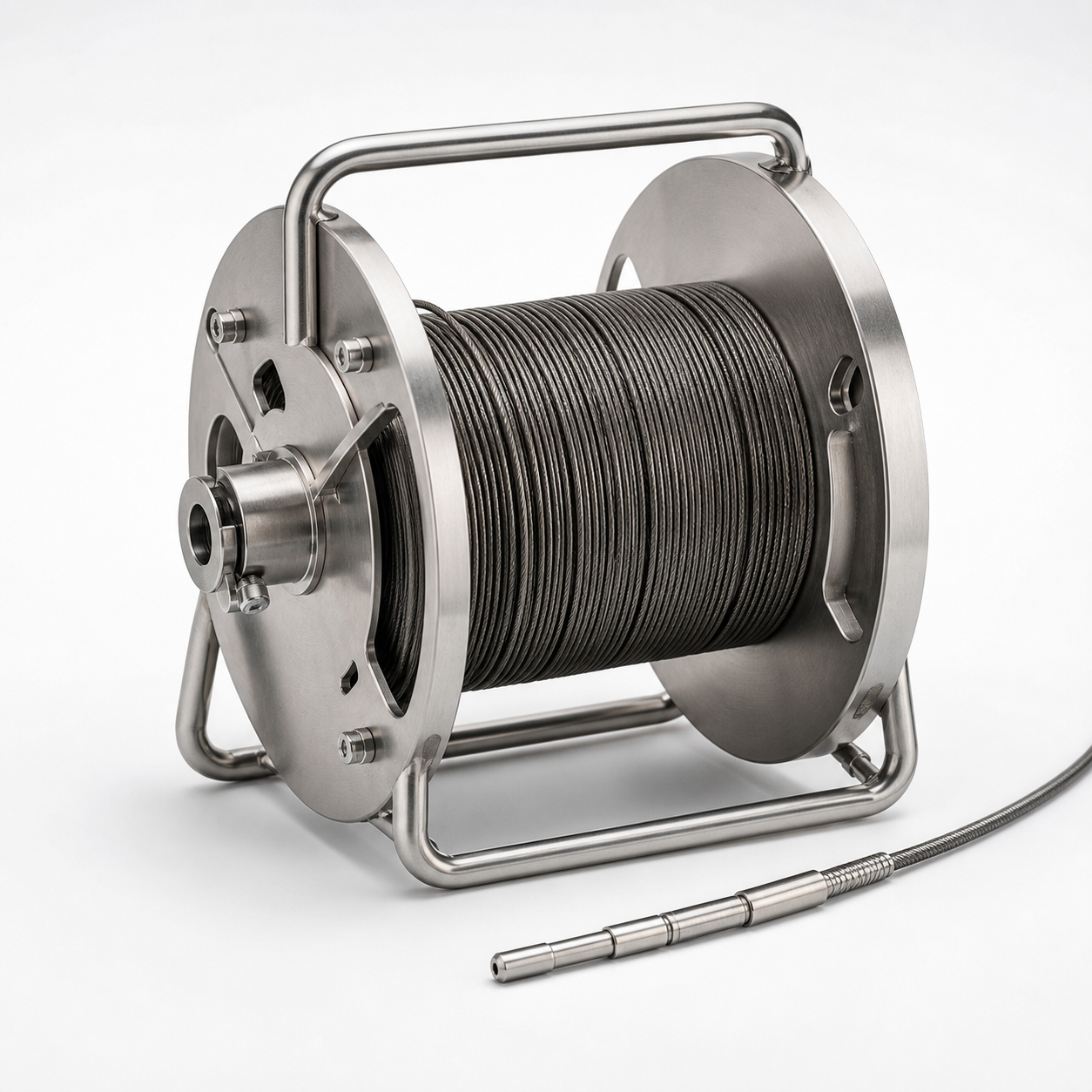
What Is Distributed Temperature Sensing?
Distributed temperature sensing provides thousands of virtual measurement points along one fiber rather than using separate electronic sensors at fixed locations. Distance is calculated from the return time of scattered light, while the temperature calculation is commonly derived from Raman backscatter.
The result is a continuous temperature profile that can identify local hot or cold zones along a well, pipeline, power cable, tunnel, tank or industrial process route.
How Does Raman DTS Work?
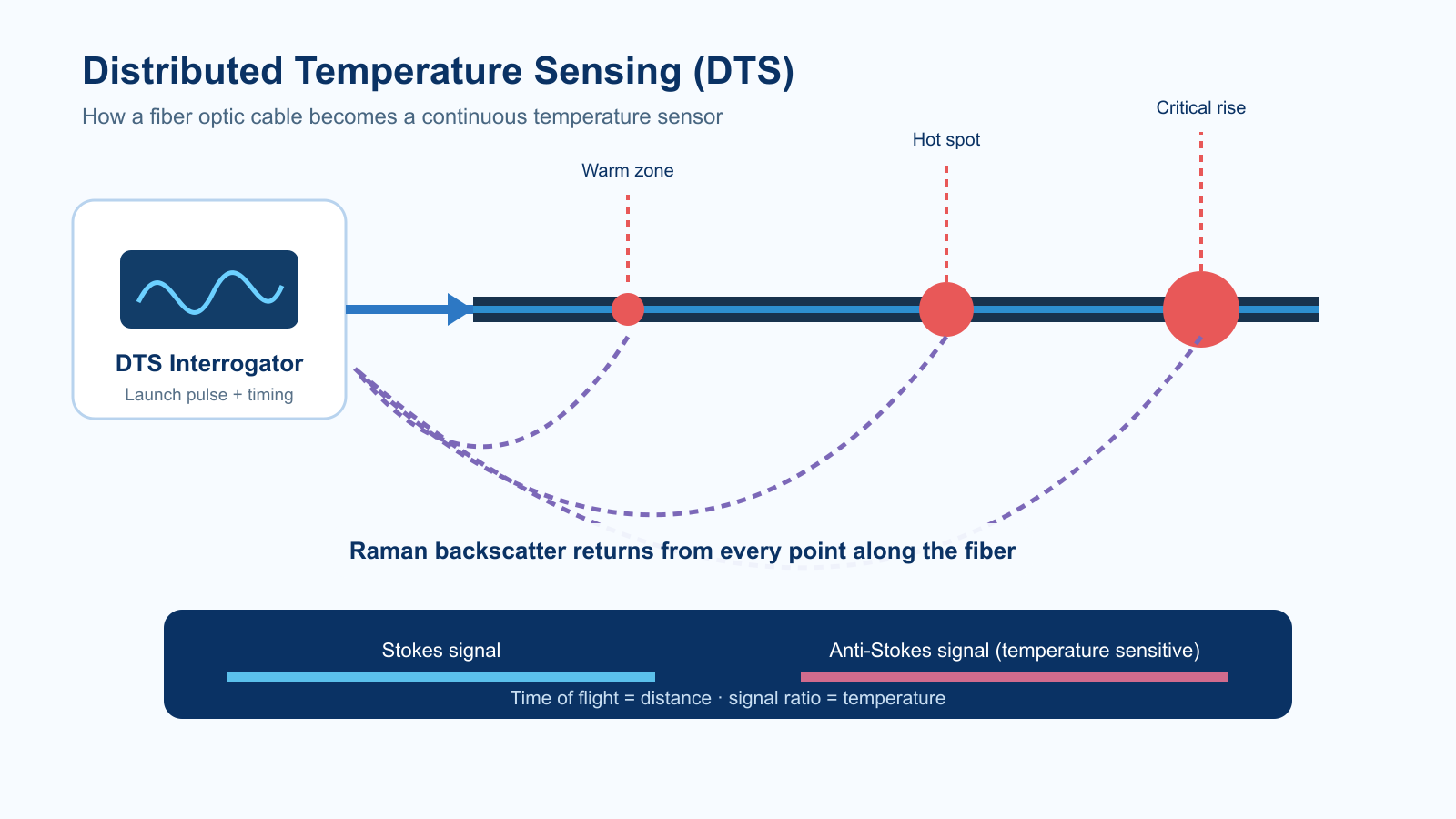
- The DTS interrogator launches short laser pulses into the sensing fiber.
- A small portion of the light is scattered back toward the instrument.
- Temperature changes the relationship between the Raman Stokes and anti-Stokes signals.
- Optical time-domain techniques convert return time into distance.
- Calibration and signal processing produce a temperature-versus-distance trace.
Other distributed sensing methods may use Brillouin or Rayleigh scattering, but Raman-based systems are widely used for distributed temperature measurement. Instrument design determines compatible fiber, wavelength, range, update rate and achievable resolution.
DTS System Components
| Component | Function | Key selection question |
|---|---|---|
| DTS interrogator | Launches pulses and converts backscatter into temperature and distance | What fiber type, wavelength, range, resolution and channel count are supported? |
| Sensing fiber | Acts as the distributed sensor | Is its attenuation and backscatter response compatible with the interrogator? |
| Fiber optic cable | Protects and positions the sensing fiber | Can it survive temperature, pressure, chemicals, tension, crush and installation? |
| Termination and feedthrough | Connects the downhole or field cable to the instrument | Are seals, connectors and splices rated for the same environment? |
| Software and calibration | Processes, displays and alarms on temperature data | How will reference sections, calibration and data integration be handled? |
Why DTS Cable Selection Matters
The optical fiber provides the sensing signal, but the cable construction determines whether the fiber remains protected and properly coupled to the measured environment. Excess loss, microbending, hydrogen exposure, seal failure or mechanical strain can reduce measurement range or end service prematurely.
For downhole and oilfield projects, review the Opticlumos oil-well temperature sensing fiber optic cable reference constructions.
Seven Inputs for Selecting a DTS Fiber Optic Cable
1. Continuous and peak temperature
State normal operating temperature, maximum continuous temperature, short-duration excursions and thermal cycling. Do not select only from a headline peak rating.
2. Pressure and sealing
Specify hydrostatic pressure, pressure cycling, wellhead or feedthrough arrangement and whether the cable is exposed directly to the process fluid.
3. Chemical and hydrogen exposure
List hydrocarbons, water, steam, acids, H2S, hydrogen and other media. Fiber coating, metal tube and barrier construction must match the exposure.
4. Mechanical loading
Provide deployment tension, crush, impact, vibration, bending and any clamping or anchoring loads. A cable that survives the operating environment can still be damaged during installation.
5. Fiber and interrogator compatibility
Confirm fiber type, attenuation, wavelength window, connector/splice plan and whether the DTS unit requires a particular multimode or single-mode sensing fiber.
6. Thermal response and cable coupling
Armor, tube size, fillers and installation position affect how quickly and accurately the fiber follows the surrounding temperature. Define the required response rather than assuming the smallest cable is always best.
7. Installation and serviceability
Clarify deployment length, reel size, capillary or control-line integration, termination, repair strategy and whether the installation is permanent or retrievable.
DTS Cable Installation and Commissioning Checklist
Use this as a planning checklist, not a substitute for the approved cable installation procedure, interrogator manual or site safety plan. Downhole pressure barriers and wellhead work require the responsible engineering team.
- Confirm the route and measurement layout. Record fiber allocation, splice locations, reference sections and whether the interrogator will use single-ended or double-ended measurements. Map optical distance to the physical asset.
- Record a pre-installation baseline. Check cable identification and length, inspect the reel and end protection, and save the agreed optical continuity/loss or OTDR records before deployment.
- Control mechanical loads. Follow the selected cable’s pulling tension, bend-radius, crush and anchoring limits. Do not apply a generic telecom-cable limit to a metal-tube downhole design.
- Protect joints and interfaces. Keep optical interfaces clean and protect splices, strain relief and seals for the intended environment. Record splice and termination locations.
- Verify after installation. Compare optical test results with the baseline, configure the instrument using its approved calibration process, and check temperature at known reference locations.
- Document acceptance. Save the as-installed route, optical trace, instrument settings, calibration records and agreed temperature-response checks for future troubleshooting.
Mechanical installation principles: FOA guidance on installing fiber optic cable. Calibration and measurement architecture: Silixa DTS principles. Product-specific instructions take precedence.
Sampling Interval Is Not Spatial Resolution
Sampling interval is the spacing between reported data points. Spatial resolution describes how well the system resolves a temperature transition along the fiber. Temperature accuracy and repeatability are separate properties. Ask the interrogator supplier for the definitions, measurement range and averaging time used in each specification; a finer displayed trace does not alone prove better hotspot detection.
Reference Cable Configurations for Oil-Well DTS
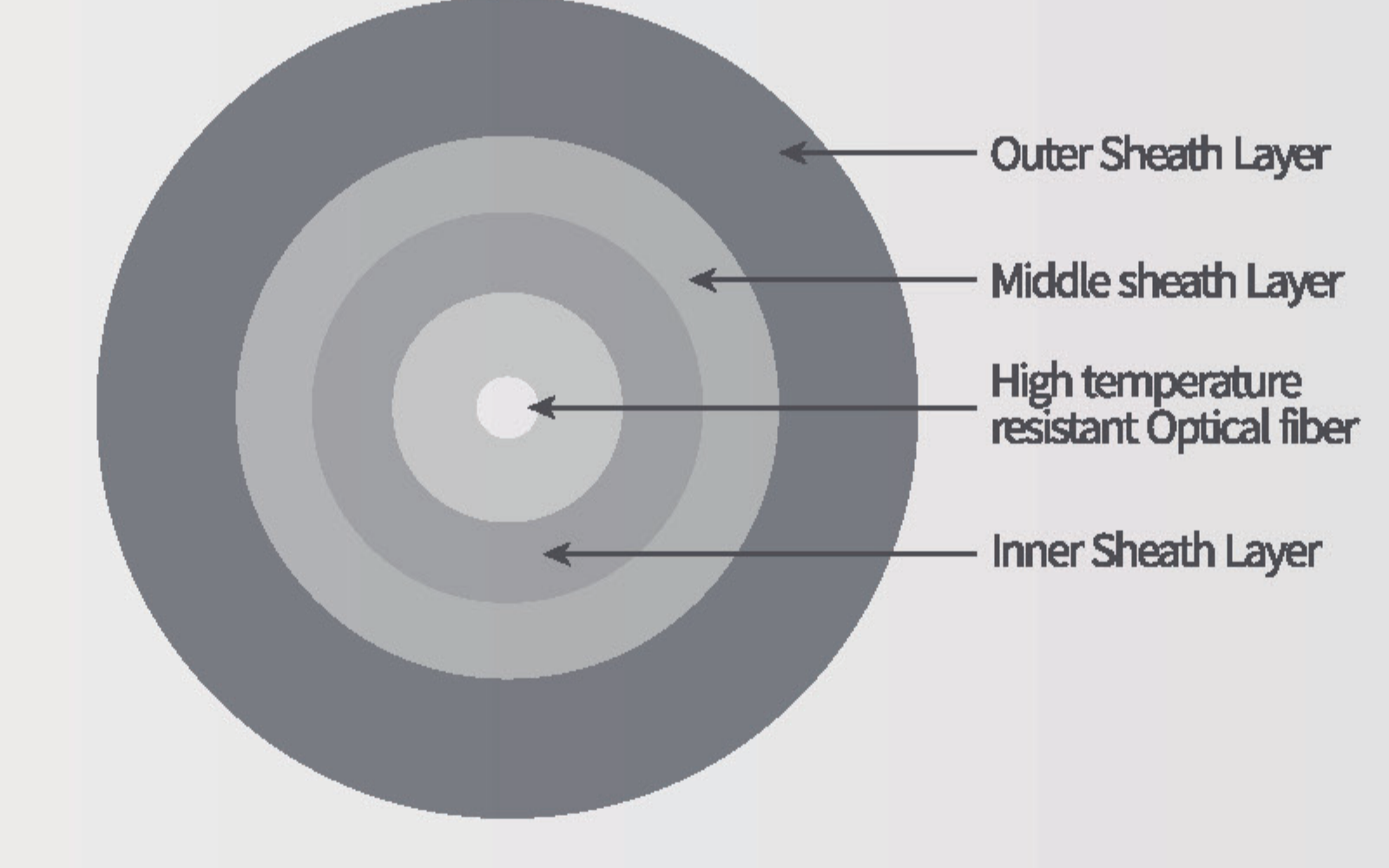
| Reference configuration | Typical construction direction | Engineering review |
|---|---|---|
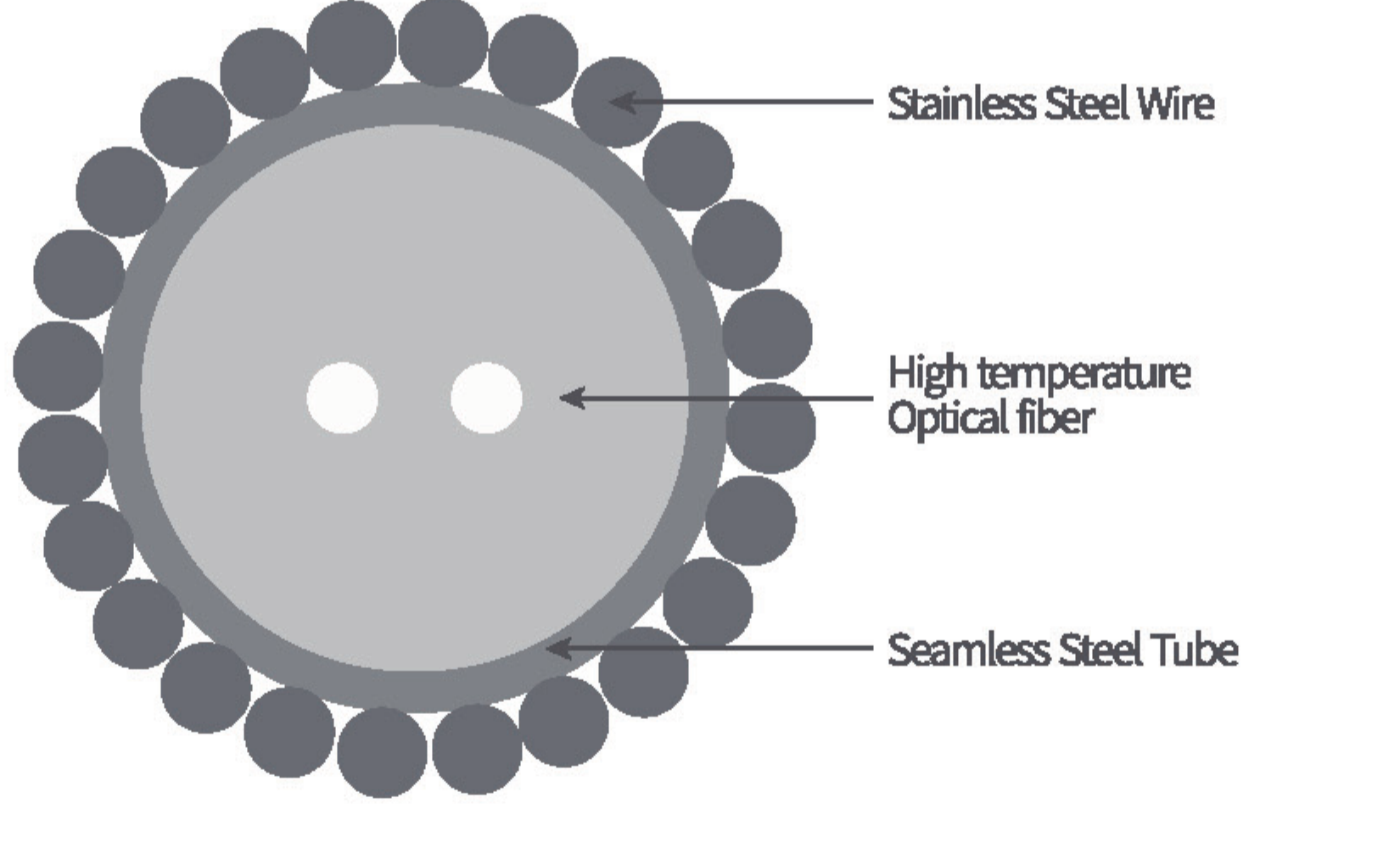
| Up to 150°C service | Metal-tube protected optical fiber with armor selected for downhole deployment | Confirm continuous temperature, pressure, chemistry, pulling load and termination |
| Up to 300°C service | High-temperature fiber/coating and metal protection designed for severe thermal exposure | Confirm exposure duration, thermal cycles, hydrogen resistance, attenuation and interrogator compatibility |
These are reference design classes, not universal ratings. Final materials and performance limits must be confirmed against the complete well or industrial environment.
DTS vs. DAS vs. Point Temperature Sensors
| Technology | Primary measurement | Coverage | Typical strength |
|---|---|---|---|
| DTS | Temperature | Continuous along fiber | Locating thermal events and profiling long assets |
| DAS | Dynamic strain/acoustic energy | Continuous along fiber | Vibration, flow-noise, intrusion and seismic monitoring |
| Point sensor | Temperature at discrete locations | Individual measurement points | High accuracy at selected positions with simpler local instrumentation |
DTS and DAS can be complementary. Whether one cable can support both depends on fiber allocation, cable coupling, interrogators and project architecture.
Distributed Temperature Sensing Applications
- Oil and gas wells: production profiling, injection monitoring, flow-event detection and well-integrity surveillance
- Geothermal and CCS wells: thermal response and long-term subsurface monitoring
- Pipelines: leak-related temperature anomalies and process monitoring
- Power cables: thermal loading, hotspot detection and rating support
- Tunnels and industrial facilities: linear heat and fire detection
- Tanks and process equipment: temperature distribution where many point sensors would be impractical
DTS Cable RFQ Checklist
- Application, route/well diagram and installation method
- Continuous, peak and cycling temperature
- Pressure, fluids, gas and chemical exposure
- Length, deployment tension, crush, bend and vibration requirements
- DTS interrogator manufacturer/model, wavelength and required fiber type
- Required spatial resolution, measurement range and update rate
- Termination, feedthrough, connector and splice requirements
- Qualification tests, documentation, reel length and delivery destination
Frequently Asked Questions
What is distributed temperature sensing used for?
DTS is used to monitor temperature continuously along wells, pipelines, power cables, tunnels and industrial assets, allowing operators to locate thermal events rather than measuring only at discrete points.
Does DTS require a special fiber optic cable?
The fiber must be compatible with the interrogator, and the cable must protect it in the intended environment. High-temperature, high-pressure, chemical or mechanically severe installations usually require a purpose-engineered sensing cable.
Does Raman DTS measure strain as well as temperature?
Raman DTS is primarily a temperature measurement technique. Distributed temperature-and-strain sensing commonly uses a different architecture, such as Brillouin sensing. Confirm the required measurands and interrogator compatibility before specifying a shared cable.
What is the difference between DTS and DAS?
DTS primarily measures temperature distribution; DAS measures dynamic strain or acoustic energy. Both use distributed optical sensing, but their interrogators, signal processing and cable-coupling requirements differ.
Can DTS operate in an oil well at 300°C?
High-temperature configurations can be designed for service up to 300°C, but the acceptable duration, pressure, chemistry, fiber coating, metal protection, hydrogen resistance and attenuation must be reviewed for the specific well.
What information is needed to quote a downhole DTS cable?
Provide temperature, pressure, well fluids and gases, length, mechanical loads, installation method, interrogator/fiber requirements, termination, tests and documentation.
Specify a DTS Cable for Your Application
Send the operating environment, temperature and pressure profile, cable length, fiber/interrogator requirement and termination drawing for technical review.
Further reading: SLB distributed fiber-optic sensing overview; OSTI report on high-temperature distributed fiber-optic sensing.