
An order that says “MTP/MPO cable” leaves several important decisions open. Connector brand, fiber layout, pinning, polish, polarity and optical acceptance limits must all match the link.
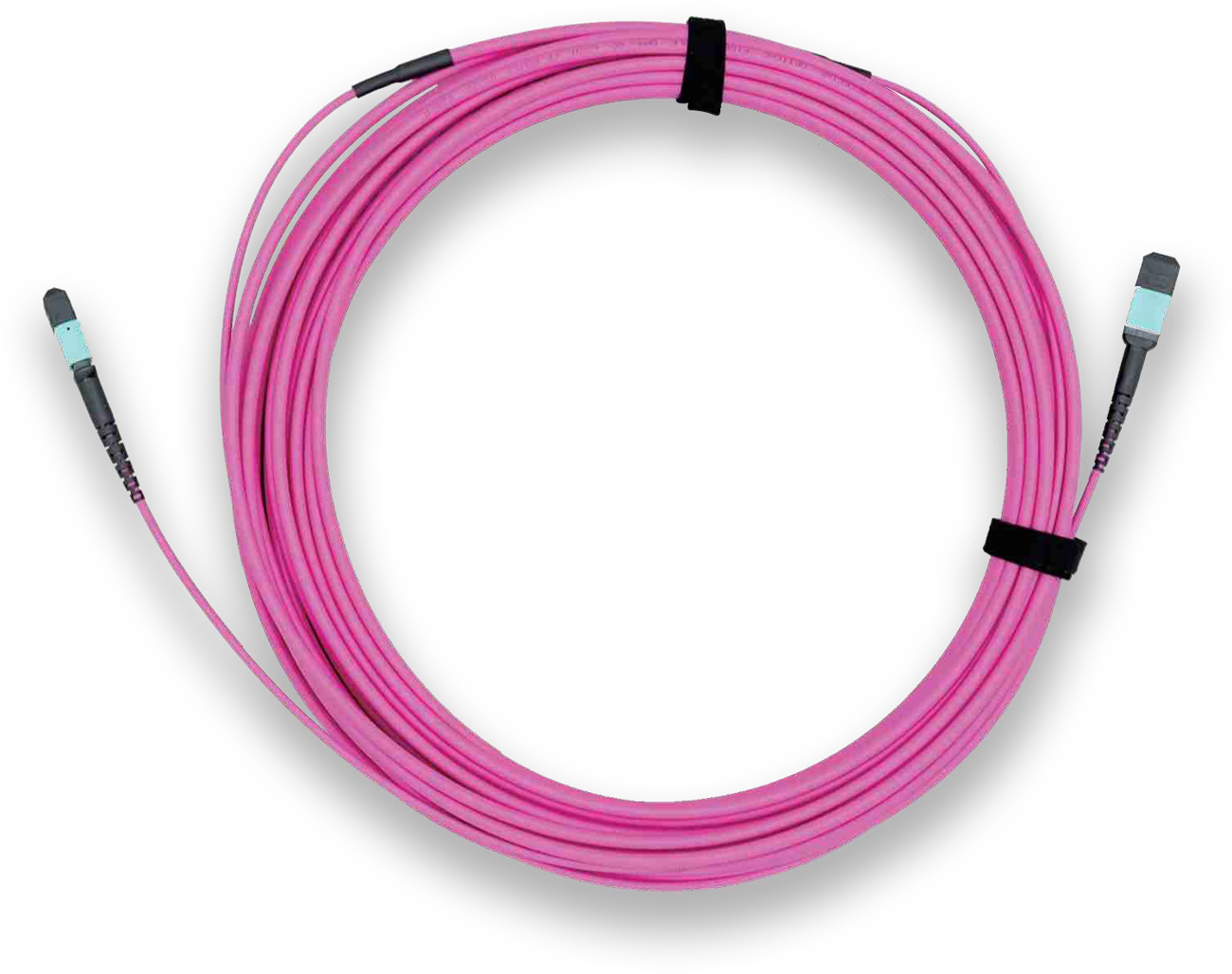
MTP vs MPO: what actually changes?
| Question | MPO | MTP® | Procurement decision |
|---|---|---|---|
| What does the name identify? | A multifiber connector interface family | A US Conec brand of MPO connector | Specify a required brand and part number when applicable. |
| Does the name define optical loss? | No; grades and assembly quality vary | No single value covers every MTP component and grade | Request a maximum loss per channel under agreed test conditions. |
| Does it define polarity? | No | No | Attach the end-to-end fiber map. |
| Can it mate with another MPO-style connector? | Depends on matching interface details | Designed for applicable MPO interfaces | Check ferrule layout, pins, keying and polish before mating. |
| Are housing or field-change features identical? | Depend on the selected design | Depend on the particular MTP product family | Confirm any polarity/gender-change procedure by part number. |
US Conec identifies MTP as its MPO connector brand and describes features including a floating ferrule and precision guide pins. These are component design distinctions; the final assembly still needs suitable termination, inspection and test results. See the manufacturer’s MTP connector information and technical FAQs.
Can MTP and MPO connectors connect together?
Matching, standards-compliant interfaces can intermate, but “both are MPO” is not a complete compatibility check. The connection must satisfy all of the following:
- Ferrule layout: compare row count, position count and populated positions. Do not treat every 8-, 12-, 16- or 24-fiber format as physically interchangeable.
- Pinning: the mating pair needs the specified pinned and unpinned configuration. Record the gender of each cable end and the interface it meets.
- Polish: match the specified endface type. Do not mate PC/UPC and APC interfaces simply because their housings appear similar.
- Key orientation and mapping: verify the complete path from transmitter to intended receiver, including adapters, trunks, cassettes and patch cords.
- Fiber and equipment: match single-mode or multimode fiber, the equipment specification, wavelength and supported link architecture.
Compare loss grades rather than brand names alone
Ask whether a quoted loss is typical or maximum, whether it applies to a connector connection or the full assembly, and how the reference measurement was made. A low average can hide a channel that exceeds the project limit. Acceptance should cover every specified channel.
The OpticLumos MPO assembly page lists the available configurations and optical grades. Its low-loss references are ≤0.35 dB for single-mode and ≤0.30 dB for multimode; standard references are ≤0.75 dB and ≤0.70 dB respectively. These are product selection references, not a universal MPO specification or a completed-link guarantee. Confirm the selected construction and test conditions with the quotation.
Build the channel budget from all mated connections, fiber length and other passive components, then allow the project’s required margin. If the link fails acceptance, check contamination, mating alignment, polarity and reference setup before assuming a different connector brand will solve it. Our fiber attenuation and loss-budget guide explains the distinction between connector loss and fiber attenuation.
When should you specify MTP or a generic MPO assembly?
Specify MTP by exact component family when a bill of materials, approved vendor list or required service feature calls for it. Ask the supplier to identify the actual components and supporting documentation. A slash in “MTP/MPO” is not evidence of branded supply.
Specify an MPO assembly by measurable requirements when the project permits an interface-compatible alternative. Compare the approved drawing, per-channel limits, traceability, installation constraints and acceptance evidence. Select the construction that meets those requirements rather than treating one word as a quality certificate.
For a trunk that terminates in individual LC ports, continue with the MPO-to-LC breakout cable selection guide. The fanout’s leg numbering and duplex pairing deserve a separate drawing.
What to include in your connector RFQ
- Equipment/cassette interface and required connector brand, if any.
- Fiber type, total fiber count, ferrule layout and populated positions.
- Pinning and polish at each end; adapter/keying requirements.
- Complete polarity map, channel labels and any LC duplex pairs.
- Total length, branch lengths, routing space, jacket and strain relief.
- Maximum insertion loss, return loss where required, test wavelength and reference method.
- Quantity, drawing approval and required inspection/test records.
Frequently asked questions
Is every MPO connector an MTP connector?
No. MTP is a US Conec brand of MPO connector. Generic MPO assemblies should not be described as MTP without confirmation of the actual components.
Does MTP always mean lower assembly loss?
Do not infer a numerical assembly limit from the brand name. Compare the selected optical grade and per-channel test requirements for the actual assembly.
Does MPO guarantee 400G or 800G compatibility?
No. Confirm the transceiver interface, fiber layout, lane architecture, fiber type, reach and optical budget. A connector-family name is insufficient to establish a data rate.
Can OpticLumos quote an MPO trunk or LC fanout?
Yes. Send your interface requirements and channel map for a configuration review. MTP-branded components or other brand-specific requirements must be separately confirmed in the quotation.
Specify your MPO assembly with confidence
Send the mating interfaces, fiber map, lengths and loss limits. We can review a trunk or fanout configuration and prepare a project quotation.